
Correct vs. Incorrect: Woman, Girl, Female

Worthwhile language advice
Have a question about language at work? You can send it to admin@worthwhileconsulting.com. All questions are anonymized.

“Please give me a quick and easy way to correct people who are being weird with how they use the words woman and girl. And female. It’s bad out there.”

In principle, the use of the words woman, girl, and female is really straightforward and simple.
But because of cultural pressures, it’s easy to find distorted and damaging use of these three terms.
Let’s dive in!
The Right Way
All words are signs that point to something in the world. And it is important to use precise and accurate terminology that correctly points to its real-world reference.
Female
The word female points to a human being who is either a girl or a woman.
When referring to human beings, the word female is only used as an adjective. Want to refer to a female human being using a noun? Then you’ve got woman or girl.
Woman and girl
The word woman points to a female person who is an adult.
The word girl points to a female person who is a child.
Here in the US, the dividing line between childhood and adulthood is your 18th birthday.
So, if you are considered female at birth and continue to be female, you are a girl from age 1 day to age 17 years 364 days. (Yes, yes, this may be 365 days if it is a leap year.)
Then, from your 18th birthday until the day that you die, you are a woman.
Done.
Female and under 18? A girl.
Female and 18 or over? A woman.
It is as simple as that.
What about other developmental milestones?
Yes, puberty for most girls takes place before the age of 18.
Yes, the age of consent in many US states is under 18.
Yes, in 39 US states, marriage is legal when one party is under the age of 18 (and that party is almost always a girl).
Yes, for most people, the brain’s prefrontal cortex, which governs over impulse control and decision making and certain kinds of planning, doesn’t fully mature until around age 25.
None of this matters when you choose girl vs. woman. Because in English-speaking countries like the US and Canada and England, we have concluded that 18 is the dividing line between child and adult.
Let’s say you want to point out that someone female is young.
Under 18? Depending on age range, they might be described as a young girl, an adolescent girl, a teenage girl, or (please, only if completely relevant), a pre-pubescent or pubescent girl. If gender isn’t relevant, they can be described as a young child, adolescent, or teenager.
Below the age of consent? This is an underage girl.
Married under the age of 18? This is a child bride who is taking part in child marriage.
18 and over? They can be described as a young woman. The phrase young woman is not appropriate or accurate for anyone under the age of 18.
The Wrong Way
There is a lot of distorted and shifty and squirrelly use of the words woman, girl, and female out there these days. And, with one exception, these distortions can usually be traced back to an agenda where people are purposely trying to manipulate our understanding of the world and excuse or encourage bad behavior.
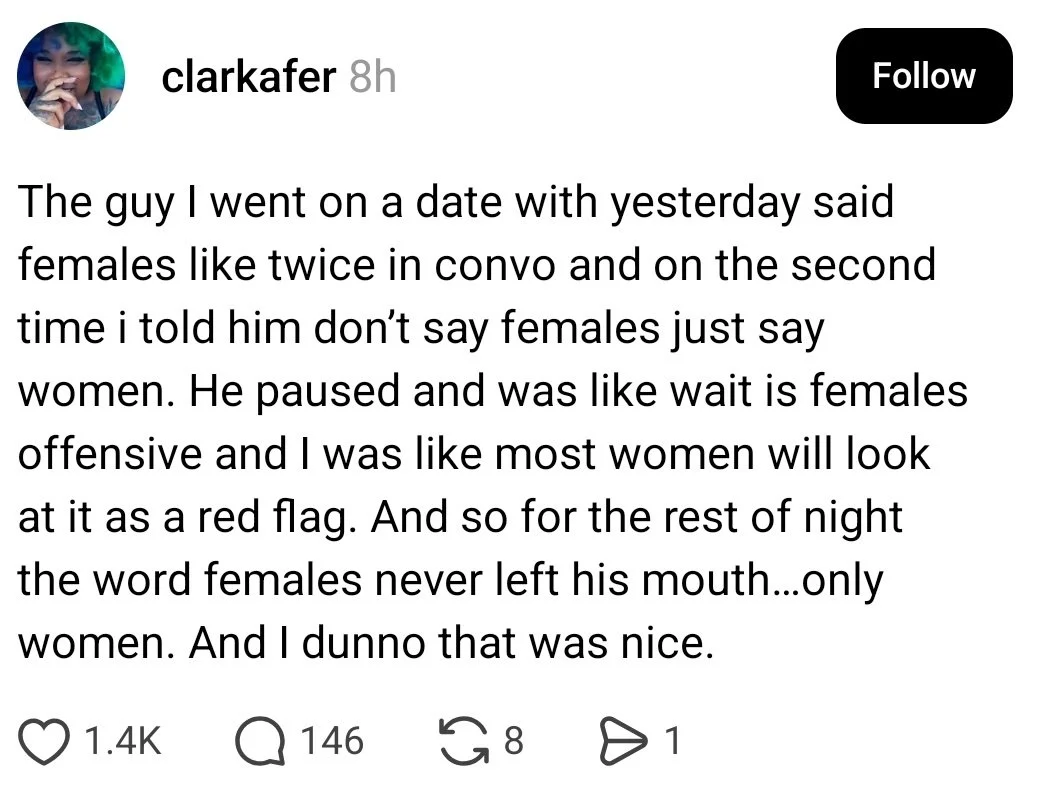
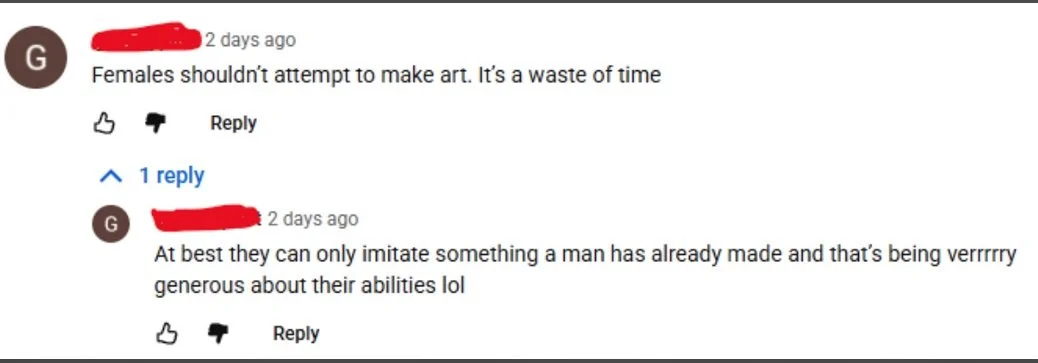
Wrong: Using female as a noun, which shows up in two ways.
People saying a female or females with good intentions, to try and sound scientific or fancy. (This is the one exception I just mentioned). Unfortunately, this isn’t a good usage, since it actually dehumanizes women and girls by presenting them as animals. Any animal can be described as a female, but only a human can be called a girl or a woman.
People saying a female or females to purposefully dehumanize and diminish women and girls. This is far more common than use #1 and is more pervasive than you might think. The focus in this use is on biology and women and girls as animals (with all this implies), while boys and men are presented as fully human. It is so common to find texts that compare men to females that there is an entire subreddit called r/MenAndFemales that just collects examples. Sure, some examples are toxic online discourse, but others include medical lab writeups of test results, where testosterone levels in men are contrasted with testosterone levels in females. Other examples feel well within the red-pill and incel community – saying females is a gateway to terminology like foids, and is seen by many as a red flag.
Wrong: Saying girls to refer to women. We see this all the time. At work, it might sound like “the girls in marketing” or “my girl will take care of that.” Out in the world, pay attention to how common it is to refer to professional women as girls. For example, the three real human singers for the fictional KPop Demon Hunters group Huntr/x are 33, 30, and 26 years old, but are consistently referred to as girls both by the press and by their colleagues.
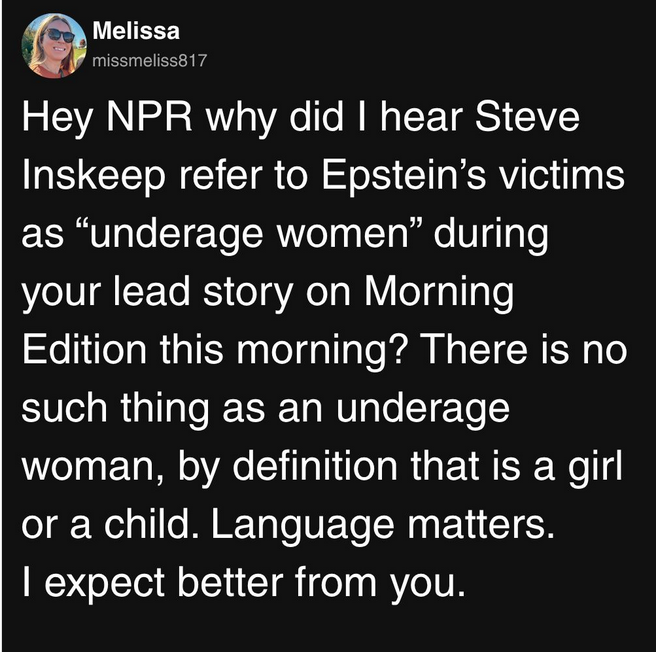
Wrong: Saying underage women to refer to girls. This has been showing up in coverage of the so-called Epstein Files, including on seemingly reputable and mainstream media sources such as National Public Radio. There is no such thing as an underage woman. Underage refers to being under a legal age for an activity such as drinking or consenting to sex with an adult. The legal age of consent is 18, 17, or 16, meaning that by definition, everyone underage is not yet 18 and therefore not an adult.
And a female human who is not an adult is a girl. Not a woman. A girl.
Just like there is no standard male equivalent of mistress, you will never, ever see the parallel phrase underage man. (Except in discussions of how this phrase is never used.)
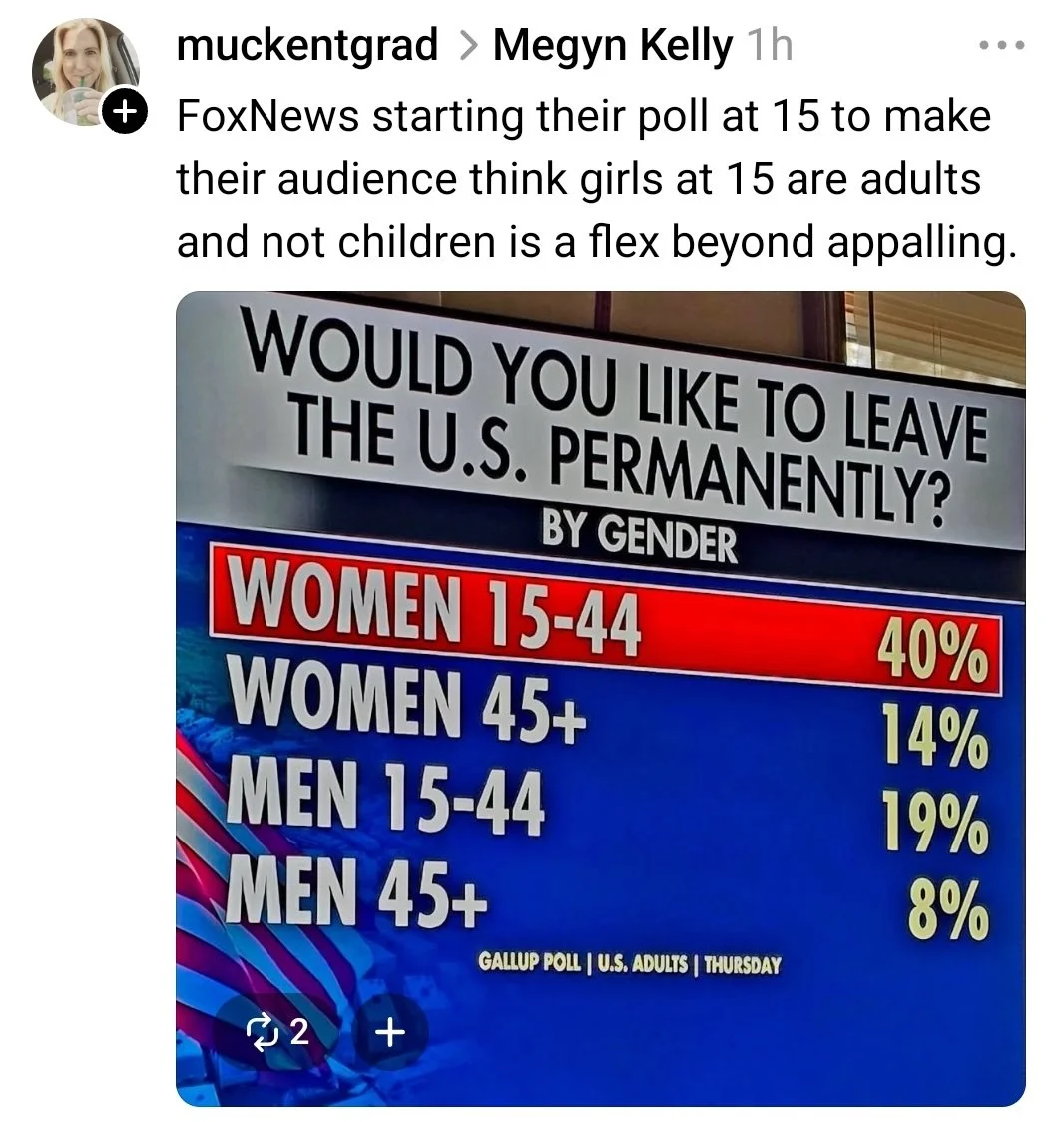
Wrong: Saying woman or women to refer to a girl or girls. Similar to the use of underage woman, we see the phrase young woman or just woman to refer to people who are under 18. But people under the age of 18 are legally and developmentally children, and female children are girls.
You will sometimes, but far less frequently, see the use of young men for people who should be referred to as boys. But a use that is a lot more common is softening language calling adult men boys in order to excuse or minimize their bad behavior.
What can you do?
Use these simple guidelines to point out problematic uses of woman, girl, and female. Once again:
Only use female as an adjective. Need a noun to refer to a female person? Use woman or girl.
18 or older? That’s a woman.
Younger than 18? That’s a girl.
If someone is describing humans as females, look into why they are aligned with comparing women to animals, and to dehumanizing and diminishing them.
If someone is using girl to refer to an adult, look into why they are describing a woman as not fully adult and more like a child. Who does this distortion benefit?
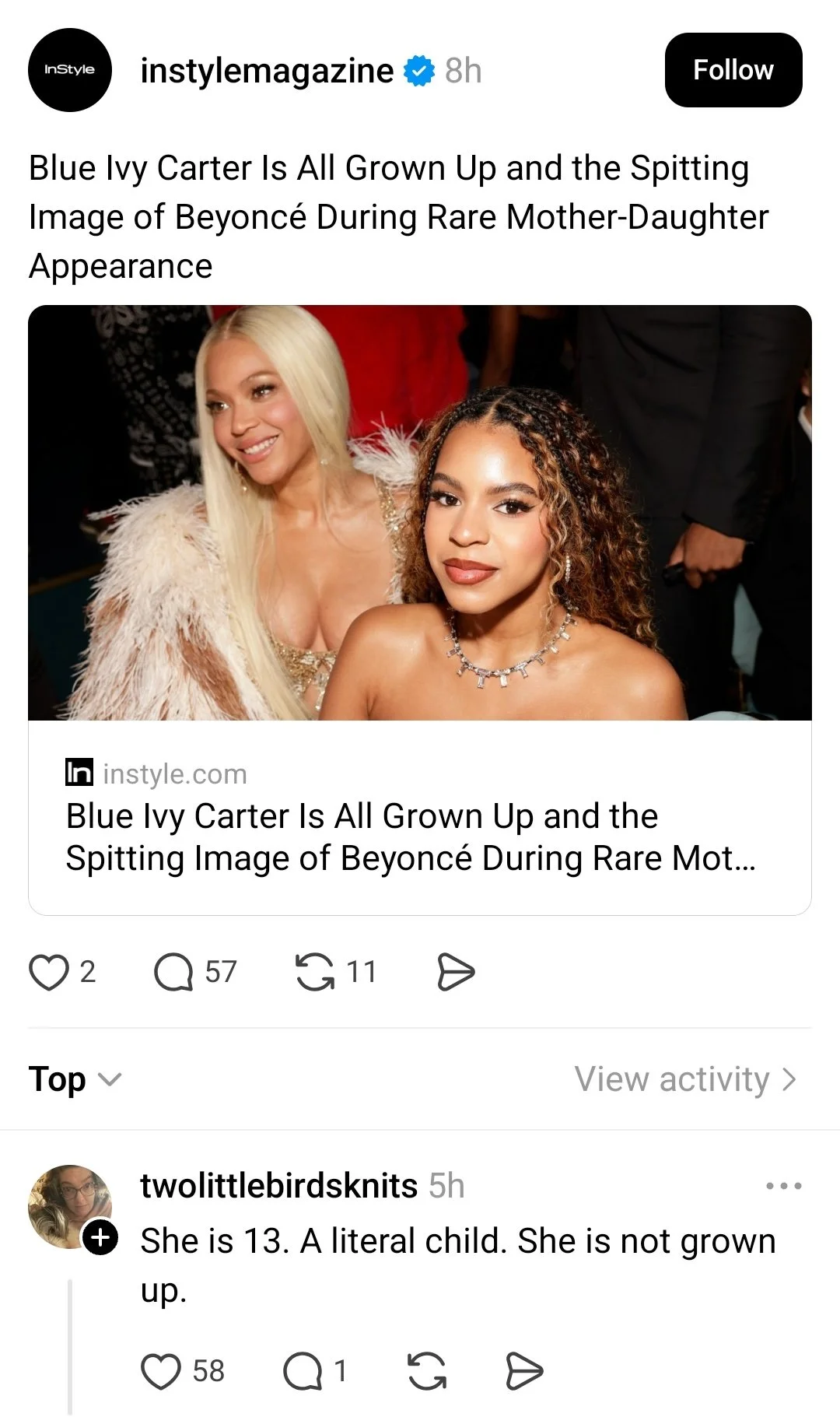
If someone is using woman to describe a child, look into why they are invested in making a child seem more adult. Like she is “all grown up.” What’s the agenda? Who does this distortion benefit?
_____
Words have power. And the words we use both reflect and reinforce our mental models and the ways we understand and judge the world around us.
So let’s use accurate terminology that helps us be precise about what is going on and make good judgements about what is and isn’t appropriate.
Copyright 2025 © Worthwhile Research & Consulting
Can your organization’s managers and HR staff make accurate decisions about language in the workplace? Or do they gloss over or even support language that damages team dynamics and creates a hostile workplace?
Worthwhile offers a workshop that can help: How to Fix Wrong Words and Messy Messaging. Post-workshop support includes a Language Assessment Checklist and dedicated time where experts answer questions and give guidance. Email admin@worthwhileconsulting.com to learn more.